Content

2023 – The Year of My TEDx Talk & Revealing my Not-so-secret Secret

CW: Suicide & Suicide-Loss Survivorship

It is mid-December and 2024 is almost upon us, and I could write about how I am carefully and thoughtfully prepping for January. But my TEDx Talk titled “Changing how we talk about suicide” was posted a few days ago and I would rather write about it. This talk changed my life in so many ways and I hope it changes the lives of other folks as well.

When I began the preparation for the talk, especially the rehearsals, I underestimated the effects of repeating the words describing my husband’s death by suicide or feeling my profound sadness. In some ways I was reliving the first days after his death and the biggest surprise for me was the intensity of my emotions.

Truthfully, I knew that I had such emotions, but I was ashamed that others would know just how deeply I felt about Tony’s suicide and how profoundly I was affected by his loss even 25 years later.

When I gave the talk on October 6th, everyone who either watched it in person or via live stream now knew my shame too. 

Now that everyone knows about my shame, I might as well keep talking about it. For those of you who are going to write me to give me permission to feel how you think I should feel, please don’t. This is not yours to manage. 

We will all be better served by making it easier for people to seek out services when they need support and to make mental health just as important as physical health. I will continue to write and speak about suicide-loss survivorship. 

Be You and Be Safe,

Susamma

The Importance of Personal Milestones – 1978 to 2018

2018 is of great significance to me. I have three milestones, which I will discuss briefly. When we talk about milestones, they mark the passage of time but for me, they also represent small victories laced with grief.  I arrived in the United States forty years ago in 1978, fresh and new.  With my clean slate and new opportunities, I could accomplish anything.  Or maybe that’s what I think now as I look back.

The 28th of October makes the third quarter of every year the most difficult to get through. Twenty years ago, my husband, Anthony James Seeley, killed himself in front of me with a colt 45 handgun.  I write these words without any tears today because I have already shed an ocean of tears. However, I cannot tell you how much I will cry in ten minutes, tomorrow or the day after that.  I never thought I would survive the first year after his death, but in 2018, my husband has been dead for twenty years. Of course, I am now crying because suicide leaves its mark on those left behind.

I should mention that his death came just ten days after my 25th birthday.  I will forever mark my life by the date of his death.  However, I remember him every year and honor him. I do this not because he killed himself but because he was alive. We had shared a life, no matter how brief.  Suicide robs everyone of that life and those of us who are left behind need to talk about the consequences.

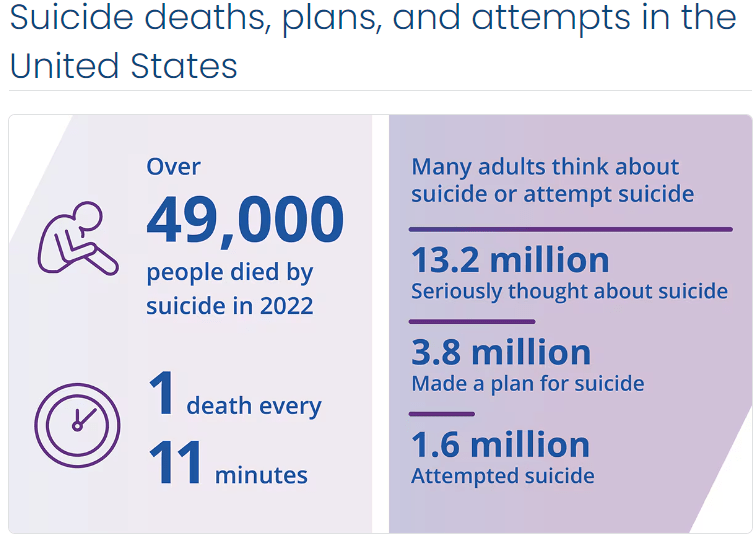
According to the Centers for Disease Control, suicide is the 10th leading cause of death in the United States.  The Veteran’s Administration indicates there are anywhere from 20 to 22 suicides a day among Veterans, National Guard, Reserve, and active-duty service personnel.  This is a mental health issue but also a public health issue.  Twenty years ago, when my husband was suffering, I did not understand what was happening nor did I recognize the signs.  Please take the time to inform yourselves. Here’s a link to the Mayo Clinic for suicide prevention material.

Before you think I am going to leave you all with just the sadness, let me tell you about my shortest milestone so far.   I am a second-year doctoral student in disaster science and management.  Back when I was a young immigrant to this country, I did not know what I wanted or what I could do.   I also did not know how I could serve others.  I have these answers today and as a Ph.D student, I feel almost as fresh and new as I did back in 1978.  Thankfully, I have my 2018 knowledge with my years of experience, but I am grateful for living long enough for these milestones.

Thanks for reading and be blessed.

Equity vs. Equality in Emergency Management: Why the Difference Matters

In emergency management, our mission is clear: save lives, reduce harm, and help communities recover as quickly as possible. Yet, too often, our approach unintentionally leaves some communities in worse shape than before. Achieving fairness requires understanding the difference between equality and equity—two concepts that may seem similar but have vastly different impacts on disaster preparedness, response, mitigation, and recovery.

Equality: The Same for Everyone
Equality means providing the same resources or opportunities to everyone. While this may sound fair in theory, it assumes all communities start from the same place. In reality, a one-size-fits-all approach often overlooks the fact that different communities face different risks and barriers, leaving the most vulnerable behind.

For example, if emergency evacuation instructions are only provided in English, non-English speakers won’t benefit equally. If shelter beds are distributed equally across all neighborhoods—without considering population density or existing vulnerabilities—some areas may be left without enough support. Simply put, equal distribution does not always lead to equal outcomes.

Equity: Meeting People Where They Are
Equity acknowledges that different communities have different needs. Rather than distributing resources equally, equity ensures that aid is allocated based on need. This could mean:
• Translating emergency alerts into multiple languages,
• Prioritizing accessible transportation for people with disabilities, or
• Directing more recovery funding to historically marginalized communities that lack the resources to rebuild.

Why Equity Matters
Without an equity lens, disaster response can unintentionally reinforce existing inequalities. Low-income communities, people with disabilities, and historically marginalized groups often face greater risks but receive fewer resources when aid is distributed equally rather than equitably. By prioritizing equity, emergency managers can ensure that every person—regardless of background—has a fair chance to prepare for, survive, and recover from disasters.

Moving Toward an Equitable Approach

✔ Identify vulnerabilities – Understand which communities face the greatest risks and barriers and why, including limited resources for recovery.
✔ Adapt communication and resources – Ensure outreach materials, shelters, and aid are accessible to all.
✔ Engage diverse voices – Involve community leaders from underrepresented groups in planning and decision-making.


If you do not share the lived experience of a community or look like them, you cannot speak for them. Let’s be blunt: emergency management organizations are often led by white men and women who do not reflect the communities they serve—yet many believe they can speak for everyone. As disability advocates remind us: “Nothing for us, without us.”

Equity isn’t about special treatment—it’s about ensuring everyone gets the support they need to be safe and achieve meaningful disaster recovery.

A New Semester and Three Lessons for New Opportunities


As another semester begins, I find myself filled with anticipation and excitement to meet a new group of students. This marks my fifth year of teaching, and with each passing year, my passion for education and leadership studies only deepens. Teaching is not just about delivering content—it is about building connections, fostering growth, and creating a space where students can develop into thoughtful and engaged individuals. I will share three of the lessons I have learned over the past five years.


My first lesson is to never underestimate the quiet students. While some students enter the classroom unsure of their voice or perspective, they often reveal profound insights when given the opportunity. I have seen students who initially seemed quiet become the most passionate contributors to discussions, offering unique viewpoints that shift the way we all think. This constant discovery keeps teaching dynamic and reminds me to encourage the potential within each student.


The second lesson is that students need room to grow—just as we all do. Learning is not a linear process, and growth often comes with moments of struggle, self-doubt, and even failure. My role as an instructor is not to hand out all the answers but to create an environment where students feel safe to question, experiment, and learn from their experiences. Leadership, after all, is not about having all the right answers but about developing the confidence to navigate challenges and make thoughtful decisions.


The third lesson is one we all must learn, and students also don’t know what they don’t know. Many come into class with preconceived notions about leadership, decision-making, and even their own abilities. Part of my job is to push them beyond their comfort zones, encouraging them to engage with new ideas and perspectives they may never have considered. It is always rewarding to watch students move from uncertainty to confidence as they realize how much there is to explore and how capable they are of growth.


As this new semester begins, I look forward to the discussions, discoveries, and transformations that will take place. Each student brings their something to the classroom, and I am honored to be part of their journey. Teaching continues to be one of the most fulfilling aspects of my life, and I am excited to see how this semester unfolds.

Be joyful where you can,

Susamma

Changing the Narrative on Suicide

Educating my Discomfort: Race Matters of a Doctoral Journey

I have been a doctoral student for a while now. In fact, when I introduce myself at writing groups, I usually say that it is my “100th year” of being a doctoral student and I say it with all the emotion I carry in my body, mind, and soul. There are plenty of stories of what happens to doctoral students of color and our experiences.  While I want to acknowledge the harrowing journey, I also want to focus on what I have been learning as I focus on completing my dissertation and becoming Dr. Seeley.

There is no doubt in my mind that I have been treated differently throughout my doctoral studies and my professional practice because of my Brownness, being a woman, also born in India, who is a non-traditional student (older than most students and some of the professors too), etc., to name a few ways of how I am different. Because of my experiences as a disaster practitioner, I decided to pursue a PhD in disaster studies to increase equity for disaster survivors. Unfortunately, when I became the practitioner pursuing a doctoral degree, I was also subjected to a level of scrutiny and discrimination that came with a heavy mental, physical, and emotional toll.

My first lesson about understanding why I was treated a certain way by my white colleagues came from a paper from Dr. Derald Wing Sue and colleagues  titled, “Racial Microaggressions in Everyday Life”One of closest friends handed me this article after hearing about a particularly harrowing multi-day discrimination experience I had the week before with some colleagues. As she handed me the paper copy, she told me that everything I experienced was real and it had a name: microaggressions. 

After reading this article, I had two competing emotions:

I was dumfounded – There is an entire body of knowledge around race and racism and how it affects people. Consequently, this means there is an entire body of knowledge on how people are racist and how they can avoid being racist. 

How are so many of us so ignorant about racism?

Why are some of us more afraid to be called racist than to be racist? 

I was elated –This paper was evidence that I didn’t imagine how my colleagues treated me. As I look back now, reading that paper made me realize how woefully unprepared I was to deal with how pervasive racism actually is. 

My experiences and realizations forced me to learn how to defend myself. Like a good doctoral student, I educated myself on the relevant concepts like race, racism, equity, intersectionality, microaggression, British colonialism, American imperialism, settler colonialism, white feminism, and white supremacy.  Of course, this is just a partial list of concepts but this preliminary research offered structure, definition, and validity to my experiences as a Brown woman. The more I read, the more I understood about how I could validate my lived experience especially as I complete my dissertation. I had the language to define and validate my experience as well as describe what was happening around me.

I am going to skip the part about making people better or convincing others to read and learn about racism. If you really want to learn to be a better human being (a less racist human being), you can do that for yourself.

In this space, I will elevate the non-white, non-Christian, and LGBQTIA+ scholars, educators, and thinkers whose work is not traditionally shared, seen, or cited in disaster studies or adjacent topics. 

Twenty-Three Years Later

Warning – Suicide of a spouse, handgun use

Twenty-three years ago this month, I was a young soldier stationed at Fort Irwin, California. I had just turned twenty-five and thought I could I do anything. Life was as comfortable and complete as a soldier’s life could be. Tony, my husband of just over a year, was also stationed with me. When we celebrated our first wedding anniversary, I thought we would have children and grow old together. As I write this now, I did not get that long life with him, nor did we have any children.

On Wednesday, October 28, 1998, Tony shot himself in front me approximately 5:30 pm. Hours before, he was removed from a key role at his company, and he could not deal with that loss. I cannot tell you what was happening in his heart or his mind. When I look back, I can only give you my thoughts and my perspective of that day because he is gone.  His loss from this world is the one piece of my grief I cannot reconcile.  I have spent years crying and screaming.  I have been angry and mean.  I have been alone and with others.  Through it all, I still cannot get over the finality of suicide. 

My poor Tony thought so little of himself that he felt killing himself was the only way to fix what was wrong in the world.  My heart is still breaking for him as I think of this.  I often wish I could have been a better wife to him.  One who was more mature and understanding.  Unfortunately, it took surviving Tony’s suicide to make me a more compassionate and emotionally mature partner.  Everything I could not give to Tony, I have been able to be and give to my partner, Robert.   I used to feel guilt that I contributed to Tony’s suicide and did nothing to help him.  I know better now.

 I thank him now.  Because of him, I am so much better, twenty-three years later. 

#Suicide #Grief #Forgiveness #Gratitude #Compassion #Depression #LifeAfterSuicide

@rupikaur_

The Emotional Work of a PhD: Why I cannot forget my first meetings as a PhD student.

(A longer entry than my usual)

COVID Update –

My last entry was a short reflection about life during the pandemic. Although many folks have been vaccinated, there are still many people across the world who are still dying from COVID, particularly in India.  See this article from the BBC that tries to account for numbers all around the world.   It is important to note that these numbers will not include every death due to COVID not does it show all the emotional and physical toll on families worldwide.

The Beginning of My Doctoral Journey –

Dear readers, you are all probably wondering why I waited this long to write about my first days a PhD student.  Last year after the murders of Mr. Floyd and Ms. Taylor, UD like many schools called for groups of professors, staff, and students to have conversations about the systemic inequities faced by students of various backgrounds. Many of these efforts seemed performative but many of us joined them anyway in hope of spurring change and making lives different.   It turned out that joining these groups was fruitless because some of the members managed to diminish the perspectives of students of color while using our emotional labor and presence.  This experience angered and upset me so much that I must share it with others.

The GRE –

I started my PhD journey in the summer of 2017 when I moved to Delaware to study at University of Delaware.  My coursework started at the end of August, but my emotional journey started much earlier. 

Applying to a PhD program required many steps before I even completed an application. In my case, it also meant taking the Graduate Record Exam (GRE) and relearning algebra, geometry, and other quantitative skills that I have not touched since my high school and undergraduate years of college.  The GRE exam and any current prep materials, and courses also cost money.  I was fortunate that I had money saved to apply to these costs and had the time to prep for the exam.  The day I took the exam, I can tell you that I was praying just to pass.  I knew that my PhD application would be incomplete without passing GRE scores. I was also realistic about my test anxiety and inability to test well in these situations.   When I completed the exam, I got my score, and it was low.  But I did not care; I passed.   I could check the GRE off my list. 

Once I assembled my application with my writing sample, letters of recommendation, transcripts, and résumé, I sent it off with a prayer.  We must put so much faith in the admissions committee.  Will they see us as whole people or only as a GRE score?  I know with such a low GRE score I many only be seen as that – a low scoring individual.  I even had a conversation with a professor who told me I would not be a good candidate for the program because my score was so low.  I told this professor that in my professional capacity I had no problems working with my multidisciplinary colleagues even when I did not fully understand their areas of study. I had the ability to collaborate and learn with and from my colleagues.  Since the GRE is just a test of arbitrary quantitative, qualitative, and typing skills completed in limited time frames, it could not measure my actual work or my future potential

In the end, I was accepted into the disaster science PhD program but still placed into the “less than” category because of my abysmal GRE score.  In fact, during my first two meetings with UD professors, I was told how I could be a better graduate student.  One of those suggestions included joining the school chapter of the International Association of Emergency Managers (IAEM).  I thought that was a remarkably interesting suggestion. As a reminder, these meetings happened in the summer of 2017 and I had just spent the last five years (2012 to 2016) as the chairperson of the IAEM-USA conference committee.  Did either of these professors look beyond my GRE score and read my application?  I wonder.   Maybe they would have noticed that I was a Certified Emergency Manager and have been a practitioner in my field since 2008. How about that I was a medic in the U. S. Army or that I completed the National Preparedness Leadership Initiative at Harvard? 

Being Useful –

I met with both professors separately, and both independently suggested that I join the IAEM chapter. When I told each of them that I spent the last five years as the conference chairperson for IAEM, they were both quiet and perhaps, a little embarrassed. What was worse was that both professors told me that I would be “useful” for their students.  I realized at this point that I was not an individual to them.  I was acceptable because I could serve as a resource for their other more important students. After those appointments, I was extremely disappointed and disheartened, but I did not realize that my journey was just starting.   Being “othered” in this situation by two separate professors within an hour of each other was one of the first indications that my doctoral journey was not just an intellectual pursuit. At that point, I did not know if I was being “othered” for being a non-traditional student who came from emergency management practice, for being an older female student, or for being non-white. Unfortunately, it took months before I realized the emotional toll I dealt with as well as the typical challenges of a doctoral program.

Can’t Be Quiet Anymore –

As I mentioned in my quick intro, I joined a diversity and inclusion committee to reduce the social inequities and found myself surrounded by accomplished individuals who were still unable to see how their privilege and power were advantages that non-white individuals will never have access to.  After four years of staying quiet about my experiences, I can no longer ignore the willful ignorance of the role of privilege and power.    As a woman of color, it is time to bring my concerns forward in a space where they will be heard rather than invalidated as “just my perspective” and “not the whole story” from individuals who are not people of color and who are unable to acknowledge the differences in lived experiences.  

Many of us suffer because of the imbalance of power where we relive or experience trauma regularly in the classes we take or in exchanges with other students, professors, or staff. The imbalance of power exists because of hiring practices, implicit bias, and where some white professors/staff are unable to acknowledge the privilege (and power) they hold in being white.

I have found my thoughts and my feedback are questioned for its validity or quality because as a woman of color, I must be “angry”. I am also speaking out since I find white centering or misappropriating our experiences problematic, and it is still happening too often. 

I will continue to write about these experiences from a place of growth and a desire for change.  In my practice as a disaster manager, I often said that I would speak for those who could not speak for themselves, and I find myself doing that again.  There are many students and professionals around the world who cannot speak their truth without consequences. 

Lastly, I am not entirely free of retribution.  I am still slowly working on my dissertation proposal now and hope to be done with it in the next year.   The political fallout for a doctoral student can be terrible, but I feel so strongly about speaking out anyway. 

I thank you for sticking with me.  Stay tuned for more. 

Blessings,

Susamma

 #PhD #DoctoralJourney #Other #Othering #BIPOC #GRE #Diversity #Inclusion #Perspectives #Power #Privilege #PhDStudent
My PhD Journey – Getting back on track.

I started this blog back in 2017 with my travels in India and continued as I started my PhD.  As my studies got more intense and life got more involved, I did not write anything for my blog. I had so much that I wanted to say and today I decided it was time to get back to it. 

Sometimes, the journeys we take are not physical. We do not need to cross continents to figure out who we are. Sometimes, we need to sit still in our own spaces and look out of our windows and commune with our neighborhood birds (for weeks) to figure out exactly how happy we are and that we have achieved so many of our dreams in spite of living through a pandemic. 

2020 was a horrible year and I do not know anyone who has not felt any of that sadness.  As I write this today (Feb 21, 2021), almost 500,000 people have died from COVID-19 in the United States alone. 

Source: https://www.washingtonpost.com/nation/interactive/2021/500000-covid-deaths-visualized/?utm_source=rss&utm_medium=referral&utm_campaign=wp_national

As I said above, I spent a lot of 2020 looking at the birds of my Maryland neighborhood because contemplating the death and disaster happening all around the country was too much to handle.  At some point in the summer, I developed debilitating headaches and was ready to leave my dissertation behind forever.  Thankfully, my wonderful doctors at the Wilmington Veterans Medical Center found out what was wrong with me by the end of December. 

After a couple of CT scans, a lumbar puncture, a new medication, and lots cussing at my aching head, I was feeling a bit better by the beginning of February.  I still have headaches, but I can function.  Hallelujah!

I am excited about my dissertation again and those of you who are on my holiday card list should be seeing some cards this spring.  Now that I feel better, I can finally start sending them out. 

I will continue to write about my favorite topics and my research.  Send me comments and thanks for sticking with me! 

Peace and love,

Susamma

Lessons from Bob

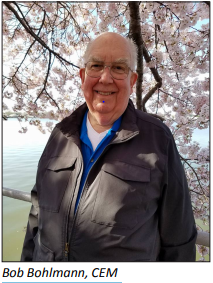
B ob Bohlmann, CEM, was known and respected by many in emergency management. In 2016, we lost him to pancreatic cancer. He was my friend and my mentor. I think of him every day and rely on the lessons he taught me with his wisdom and perspective. To truly honor the impact of his mentoring, I must share what he taught me.

1. You are never alone. Bob always ended our calls by reminding me he was there to support me. I cannot call him anymore, but I can call other colleagues and friends for help. Leverage your relationships and connections to help you through your journey. Do not forget that you can also answer the phone for others.

2. Do not be afraid to start with “I don’t know.” Everyone starts at the beginning with limited information. We are all searching for greater knowledge and competence. Recognizing that we have gaps in our knowledge or skills is the first step to improving ourselves.

3. Always look for the history. This was an important lesson for me. Whenever we talked about failures, challenges or potential policy decisions, we discussed the relevant history of that issue and the people involved. Bob also explained appropriate background details about institutional relationships or connections. Dale Carnegie taught us that people will help you achieve your goals, if you help them achieve their goals. Bob Bohlmann taught me to seek out the nuanced details from the past to better achieve all our goals.

4. Keep asking questions. Sometimes we have questions that are not easily answered. Perhaps we are not asking the right person or considering the best angle. In some cases, we are asking questions that make others uncomfortable. Discomfort is good. Discomfort leads us to discoveries about ourselves and our areas of research and practice.

5. Do not forget why you are on your journey. When your journey gets difficult and you are struggling to move forward, think about why you are here. What is your purpose? If you do not know why, maybe you need to think about it. Once you know what it is, write it down.

6. Do not settle. There are times in our lives when we take what is offered because it is easier than putting up a fight to get exactly what we need. We all have those days and those battles. For the most important issues in your life, do not accept what does not meet your most fundamental identity. No one in the world will fight harder for your identity and goals than you. If you need help, see number one.

7. Be kind. Bob was such a gentle man and a gentleman. He taught us that we lose nothing by treating others with kindness and respect.

8. Sometimes people will not like you. This is not easy to hear. However, if we think back, we will remember people whom we did not like. Bob taught me that being respected was more important than being liked. I also have learned that sometimes my dislike is more about me than the other person.

9. Check yourself first. You probably do this already, but just in case, check your biases and prejudices before you assume it is the other person who has a problem. Bob was good at this, and with his example, I learned to find other trusted friends and colleagues who would help me check my biases and prejudices.

10. Be a mentor. This is Bob’s most important lesson. Our profession is only as strong and knowledgeable as we all are. Our failures are important – and by sharing details and lessons, we could prevent others from making the same mistakes. As you consider my suggestions, remember that you are not limited in the number of mentors. Seek out the people who will help you become the stellar person you are meant to become.

This article originally appeared in the IAEM March 2019 Bulletin.