Educating my Discomfort: Race Matters of a Doctoral Journey

I have been a doctoral student for a while now. In fact, when I introduce myself at writing groups, I usually say that it is my “100th year” of being a doctoral student and I say it with all the emotion I carry in my body, mind, and soul. There are plenty of stories of what happens to doctoral students of color and our experiences.  While I want to acknowledge the harrowing journey, I also want to focus on what I have been learning as I focus on completing my dissertation and becoming Dr. Seeley.

There is no doubt in my mind that I have been treated differently throughout my doctoral studies and my professional practice because of my Brownness, being a woman, also born in India, who is a non-traditional student (older than most students and some of the professors too), etc., to name a few ways of how I am different. Because of my experiences as a disaster practitioner, I decided to pursue a PhD in disaster studies to increase equity for disaster survivors. Unfortunately, when I became the practitioner pursuing a doctoral degree, I was also subjected to a level of scrutiny and discrimination that came with a heavy mental, physical, and emotional toll.

My first lesson about understanding why I was treated a certain way by my white colleagues came from a paper from Dr. Derald Wing Sue and colleagues  titled, “Racial Microaggressions in Everyday Life”One of closest friends handed me this article after hearing about a particularly harrowing multi-day discrimination experience I had the week before with some colleagues. As she handed me the paper copy, she told me that everything I experienced was real and it had a name: microaggressions. 

After reading this article, I had two competing emotions:

I was dumfounded – There is an entire body of knowledge around race and racism and how it affects people. Consequently, this means there is an entire body of knowledge on how people are racist and how they can avoid being racist. 

How are so many of us so ignorant about racism?

Why are some of us more afraid to be called racist than to be racist? 

I was elated –This paper was evidence that I didn’t imagine how my colleagues treated me. As I look back now, reading that paper made me realize how woefully unprepared I was to deal with how pervasive racism actually is. 

My experiences and realizations forced me to learn how to defend myself. Like a good doctoral student, I educated myself on the relevant concepts like race, racism, equity, intersectionality, microaggression, British colonialism, American imperialism, settler colonialism, white feminism, and white supremacy.  Of course, this is just a partial list of concepts but this preliminary research offered structure, definition, and validity to my experiences as a Brown woman. The more I read, the more I understood about how I could validate my lived experience especially as I complete my dissertation. I had the language to define and validate my experience as well as describe what was happening around me.

I am going to skip the part about making people better or convincing others to read and learn about racism. If you really want to learn to be a better human being (a less racist human being), you can do that for yourself.

In this space, I will elevate the non-white, non-Christian, and LGBQTIA+ scholars, educators, and thinkers whose work is not traditionally shared, seen, or cited in disaster studies or adjacent topics. 
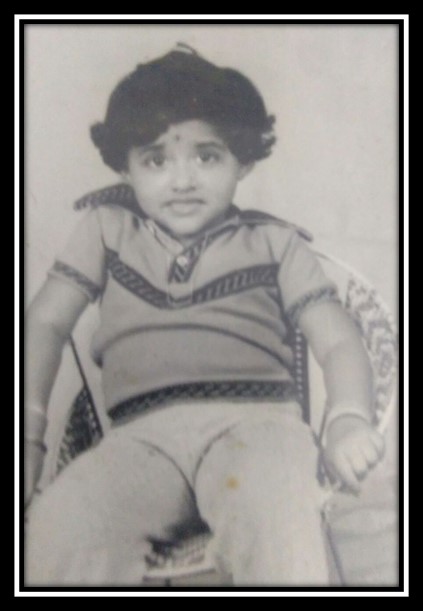
The Importance of Personal Milestones – 1978 to 2018

2018 is of great significance to me. I have three milestones, which I will discuss briefly. When we talk about milestones, they mark the passage of time but for me, they also represent small victories laced with grief.  I arrived in the United States forty years ago in 1978, fresh and new.  With my clean slate and new opportunities, I could accomplish anything.  Or maybe that’s what I think now as I look back.

The 28th of October makes the third quarter of every year the most difficult to get through. Twenty years ago, my husband, Anthony James Seeley, killed himself in front of me with a colt 45 handgun.  I write these words without any tears today because I have already shed an ocean of tears. However, I cannot tell you how much I will cry in ten minutes, tomorrow or the day after that.  I never thought I would survive the first year after his death, but in 2018, my husband has been dead for twenty years. Of course, I am now crying because suicide leaves its mark on those left behind.

I should mention that his death came just ten days after my 25th birthday.  I will forever mark my life by the date of his death.  However, I remember him every year and honor him. I do this not because he killed himself but because he was alive. We had shared a life, no matter how brief.  Suicide robs everyone of that life and those of us who are left behind need to talk about the consequences.

According to the Centers for Disease Control, suicide is the 10th leading cause of death in the United States.  The Veteran’s Administration indicates there are anywhere from 20 to 22 suicides a day among Veterans, National Guard, Reserve, and active-duty service personnel.  This is a mental health issue but also a public health issue.  Twenty years ago, when my husband was suffering, I did not understand what was happening nor did I recognize the signs.  Please take the time to inform yourselves. Here’s a link to the Mayo Clinic for suicide prevention material.

Before you think I am going to leave you all with just the sadness, let me tell you about my shortest milestone so far.   I am a second-year doctoral student in disaster science and management.  Back when I was a young immigrant to this country, I did not know what I wanted or what I could do.   I also did not know how I could serve others.  I have these answers today and as a Ph.D student, I feel almost as fresh and new as I did back in 1978.  Thankfully, I have my 2018 knowledge with my years of experience, but I am grateful for living long enough for these milestones.

Thanks for reading and be blessed.

Faith for this BrownGirl

I have officially moved to Delaware to start my life as a doctoral student.   It may seem to some that I am starting a brand new life but I am really just continuing my journey in a different place.   This is an important distinction.  Although, I am a new doctoral student, I am still the same person I have been.   Although, since my time in India, I am more aware of the similarities of people in spite of perceived differences. In some ways, I feel wiser and in some ways, I think I am more cantankerous and ornery. In any case, I recognize there is far more to religion and faith than just my faith and just my perspective.  To be a person who fits into the global world, we must be more accepting of people in the realm of faith and religion.

For the purposes of this post, religion is the organized body of a particular belief structure and faith is an individual’s spiritual leanings and practice.   Before I started my travels, I used to work as a disaster manager for an American faith-based social service delivery organization where I worked with people from many faiths across the United States.    In the space between religion and faith is the realm where life exists for people who are affected by disasters. My work often centered in this space and I became efficient at navigating between religions and faiths.  It turns out that every organization has a need for competent administrative functioning in order to help people.   I focused on what I could do to help people and kept my opinions of the politics to myself. After all, disasters do not discriminate against people or religions and politics helps no one.

Lately,  I have been very honest (cough, cough) about my personal feelings for the charlatans in the religious world. Recently, I was chastised on Facebook for seeming to have a vendetta against Christians because I shared a meme about requiring churches to pay taxes because of an affluent Texas televangelist. For the record, I am a progressive Catholic and this was not my first post challenging Christian religious practice, as it is known in certain areas.  While a few just admonished me generally for having the temerity to constantly challenge religious notions, others gave me information to correct the error I had made in this meme.  I did indeed make an error by sharing this meme. Fortunately for me, I had friends who took the time to do more than admonish me or question my faith or challenge my standing as a human being. They explained the tax law for the pastor versus the tax law for his church and reminded me of all of the small houses of worship out in the world that do so much for so many people with so little money.

How could I have forgotten that all of this is always about the people?  Faith is always about people. People sharing of themselves even when they have nothing.  Remember how I said I used to work in disasters?  Well, my best memories of that work are about people who came from the local communities or around the country to give of themselves to help a stranger who may have lost their home because of a tornado or a flood.  No one asked what faith or religion the affected persons belonged to or practiced. They just practiced their own faith and helped someone in need.