

Last year, I gave a TEDx talk called “Let’s Change How We Talk About Suicide,” and it shifted my own understanding of suicide and what it means to be a suicide-loss survivor. Speaking openly about the depths of my emotions and the lasting effects of losing my husband to suicide was terrifying, but it was necessary. My goal was to normalize conversations about suicide, self-harm, and the despair we sometimes face.
September is Suicide Prevention Month, and today, September 10th, is World Suicide Prevention Day. This year’s call to action is about changing the narrative on suicide, and we all have a role to play. According to the World Health Organization, over 720,000 people die by suicide each year, making it the third leading cause of death for 15- to 29-year-olds. If those numbers feel abstract, consider this: as you read this, there may be people around you who have thought about or attempted suicide. You might even be one of them.
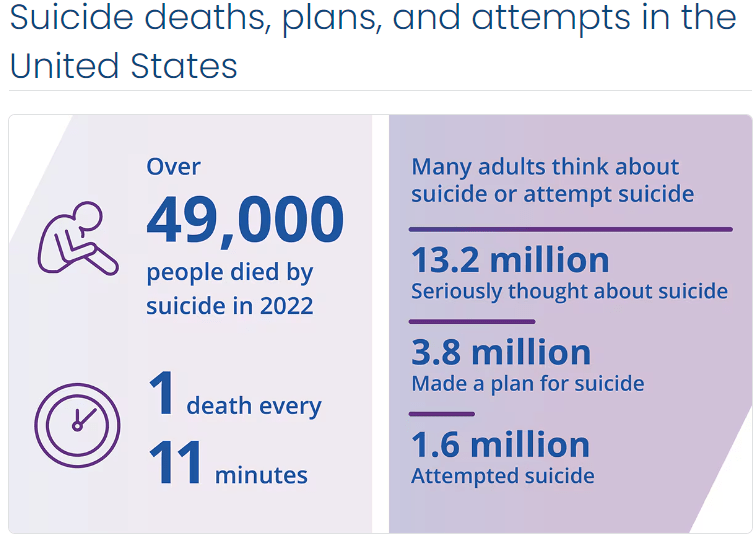
CDC – Over 49,000 people died by suicide in 2022. That is one death every 11 minutes.
Changing the narrative means broadening our understanding of who is at risk and asking direct, compassionate questions about self-harm—and genuinely listening to the answers. It also means reconsidering who we think our audience is when discussing prevention. As a suicide-loss survivor, I know all too well the pain, confusion, and struggle to understand what happens when a loved one dies by suicide. Trust me—having these conversations now is far better than dealing with the aftermath later.
If you are unsure of where to start, I like Vanderbilt University Medical Center’s What Do I Say When Someone is Talking about Suicide. The Mayo Clinic’s What to do when someone is thinking about suicide includes a video specifically about teen suicide prevention. The International Association for Suicide Prevention has a comprehensive page with examples for individuals, communities, organizations, and governments to include in daily conversations. Check out these sites and I encourage all of you to change how we talk about suicide.

#WorldSuicidePreventionDay #StartTheConversation #IASP #suicideprevention #mentalhealth #mentalhealthawareness #depression #mentalhealthmatters #anxiety #suicide #suicideawarness #ptsd #mentalillness #selfcare #suicideawareness #love #depressionawareness #depressionhelp #mentalhealthadvocate #endthestigma #mentalhealthsupport #suicidepreventionmonth #selflove #recovery #youarenotalone #trauma #mentalhealthrecovery #hope #bipolar #loveyourself #mentalwellness #anxietyawareness #therapy
 Susamma Speaks LLC